Who Owns the Time AI Gives Us Back?
Leaders need to decide where the time goes before they count it as business value.

Thoughtful inquiry for leaders shaping what their companies will become.
Showing: All Insights
Leaders need to decide where the time goes before they count it as business value.
The real AGI race is a human one: as AI grows more capable, so must we.
Accountability only works if the person who owns it can interrupt the agent and recover, so test that before you expand what your agents can do.
Leaders set the standard for AI work by how they respond when someone has the evidence to say it isn't ready.
People learn AI fastest by watching colleagues use it; design for transparency to get the most out of your AI investment.
Leaders need to plan for the work AI creates alongside the work it removes.
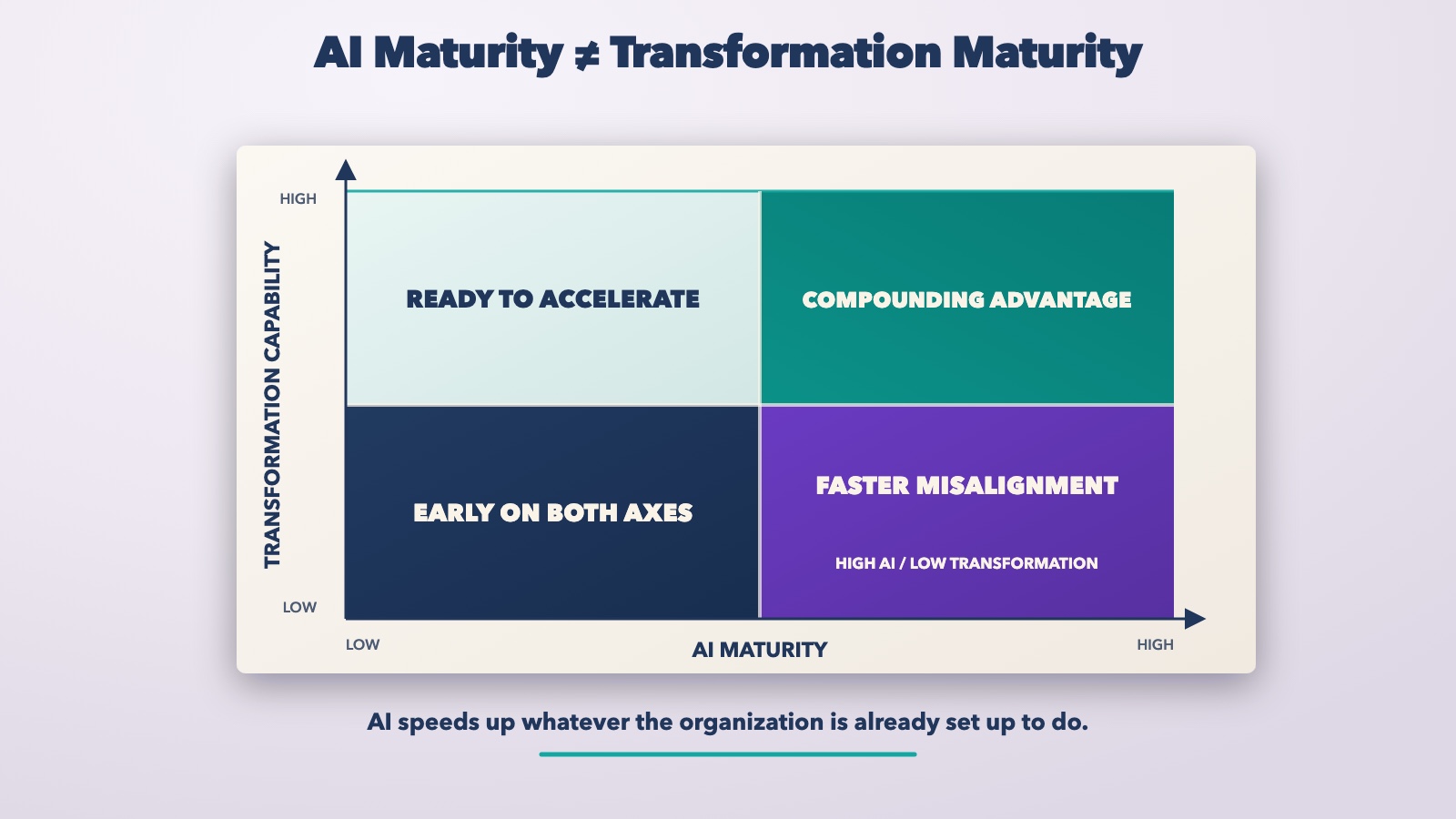
A company can become highly sophisticated in how it uses AI without becoming any better at transforming itself.
Before approving an AI investment, decide how people will learn the work once it changes.
As AI learns to take an objective and return finished work, human judgment is the skill that matters
Decide how you'd know you're wrong before an agent carries out the choice.
As AI makes established expertise easier to reuse, leaders must design work that develops judgment, renews knowledge, and expands human agency.
Executive enthusiasm is not the same as transformation readiness. Five visible signals reveal whether leadership alignment, decision rights, and organizational capacity can support the work ahead.
AI capability does not automatically confer decision-making authority. Leaders must build the judgment, accountability, and organizational design that turn intelligence into lasting value.
A stalled executive search may be combining permanent technology ownership with time-bound organizational redesign. A different question can reveal which role the business actually needs.
Share a little about the decision, challenge, or change ahead. We can start there.