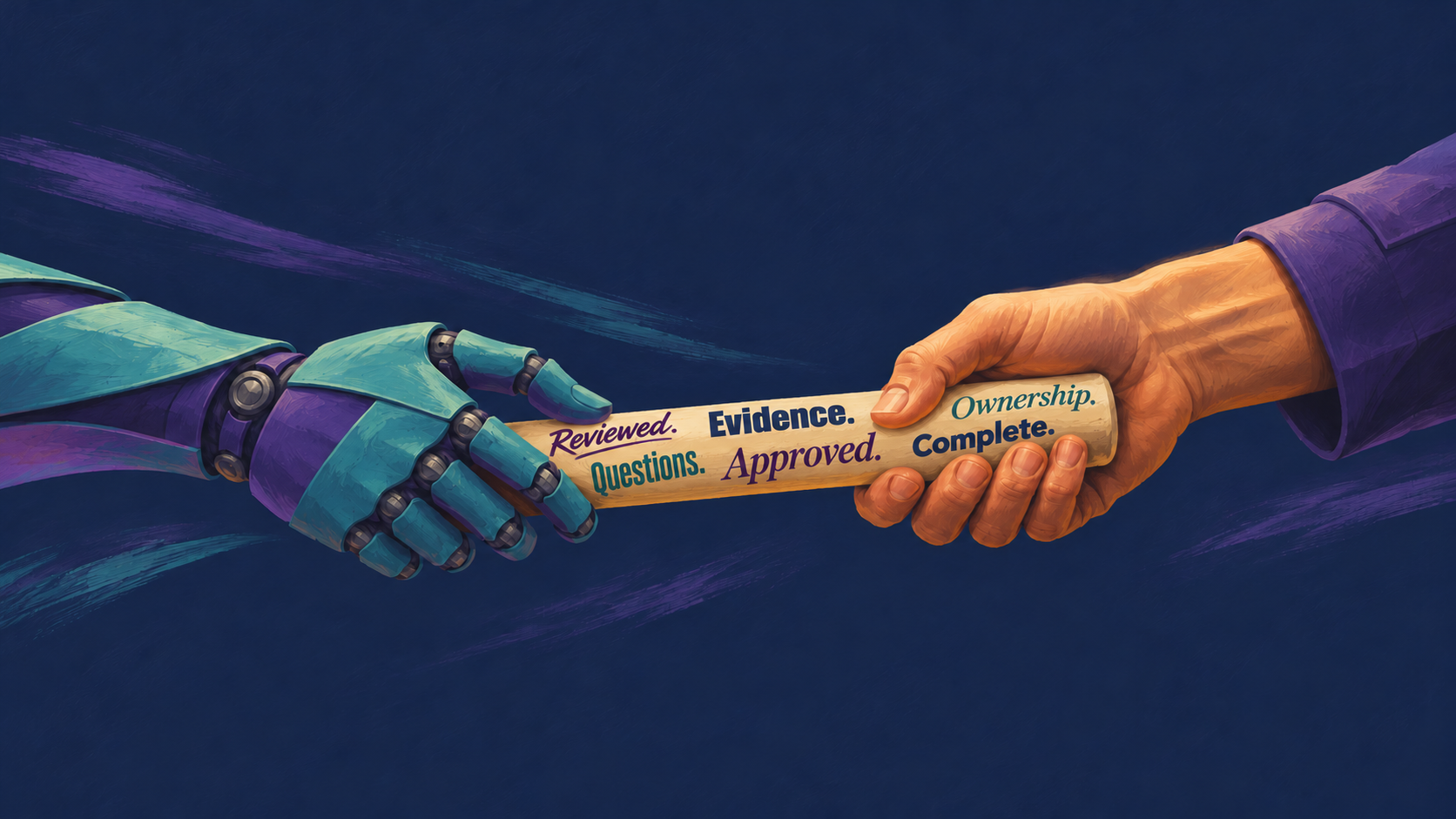
Imagine replacing your company’s AI model next month. What would your team carry over? A collection of prompts, a few successful demonstrations, and someone who knows how to coax useful answers from the current tools? Or perhaps something more durable: a shared understanding of the work, examples of what “good” looks like, and a record of which approaches helped customers and which didn’t? The latter makes learning available beyond the original experiment. A useful test for an executive might be, when the technology changes, how much of your investment is still useful? When leaders treat past learnings as part of the AI investment when a model changes, the company keeps the value of the original AI model even if it stops using it.
A Faster Market Changes the Investment Question
Vercel’s Production Index, published November 9, 2026, reported that more than half of October’s language-model requests on its AI Gateway went to model versions less than 60 days old. It also reported that half the teams using at least 10 million tokens a month changed their most-used model in October. These figures described one platform’s paying customers, and a model’s age was counted from the day it arrived on the gateway. They can’t tell us how often a typical company replaces its tools, or whether switching improves anyone’s business results (Vercel: AI Gateway Production Index, November 2026), but the data does raise a question: if the tools supporting important work keep changing, what organizational knowledge should be kept?
Leaders can respond to technological change by repeatedly buying new capability; they can also use each implementation to improve the company’s understanding of its own work. The second investment deserves explicit attention alongside the first.
Separate Knowledge of the Work From Knowledge of the Tool
Consider a distributor using AI to help prepare customer quotations. An experienced employee knows that a promising quote must account for the customer’s delivery constraints, minimum order quantities, substitutions, and the cost of a missed deadline. She spends weeks teaching the AI what matters. Some of that teaching happens through corrections in private conversations, and some becomes a carefully tuned prompt.
The resulting demonstrations look good. Then the company changes tools, and the next team can’t explain why particular instructions were added or which exceptions they were meant to address. The employee still has her expertise, but the organization has made too little of the learning available for anyone else to use.
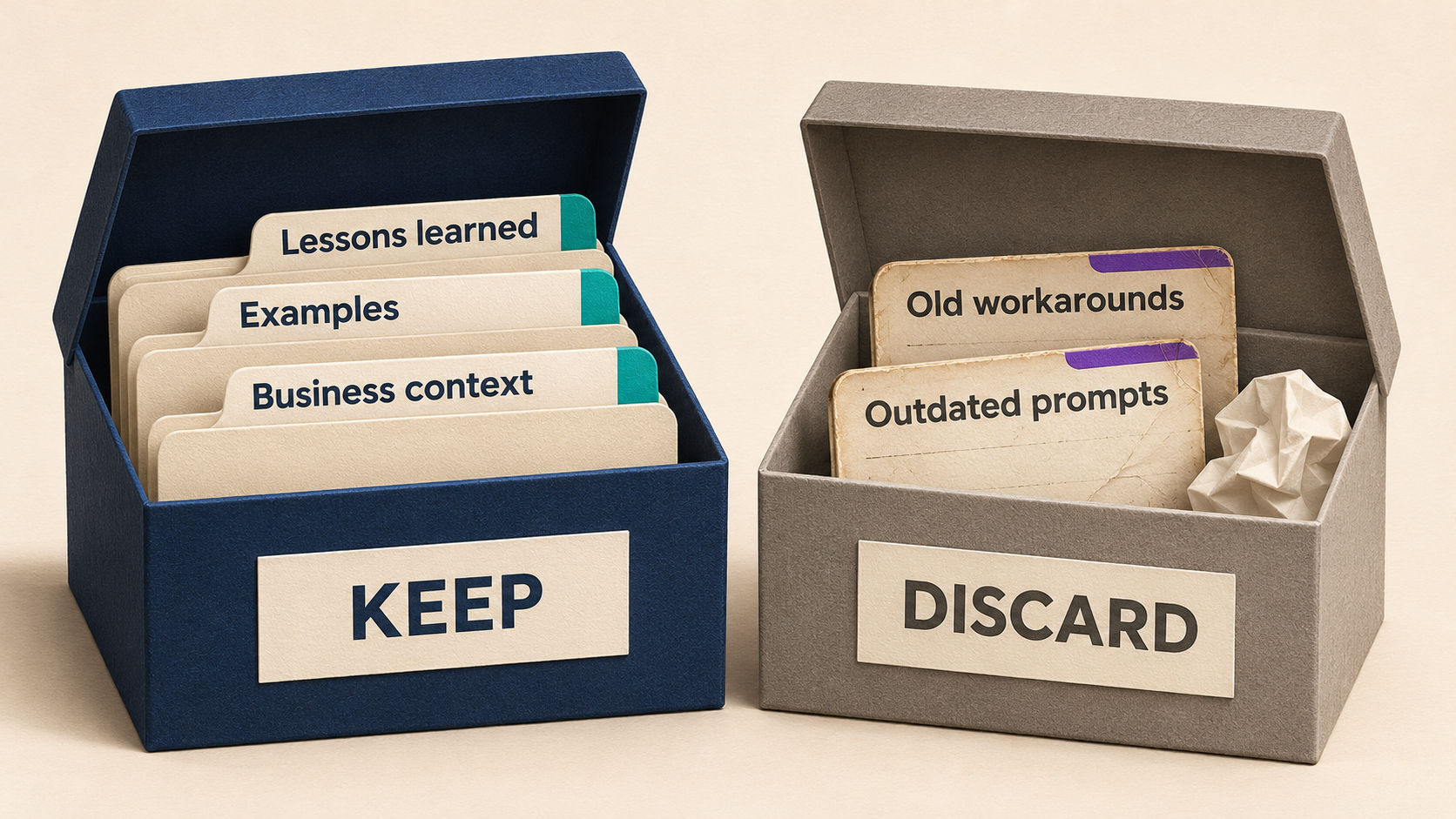
A strategic investment would leave behind a small collection of representative quotations, the business reasoning behind important choices, and examples of mistakes that changed the approach. It would also distinguish a customer requirement from a workaround that one model happened to need. “Confirm the promised delivery date against available stock” expresses a business need. The particular sequence of prompts used to get that result is an implementation choice. Preserve the reasoning and allow the implementation to improve. Not everything will transfer unchanged; new tools may require new integrations, different instructions, and additional testing. The aim is to avoid rebuilding the business understanding every time the technology changes.
Make Learning Part of the Investment
At Whole Enterprise, Repeatable Transformation™ means building the organizational capability to keep adapting as circumstances change. Applied here, an AI project should contribute to both today’s result and the company’s ability to make its next change intelligently. That’s my argument; the platform data doesn’t establish it.
Ask a project team to explain what it learned about the work itself. Which requests were poorly defined? Where did departments use the same word differently? What information turned out to matter? Which apparent exceptions revealed a flaw in the standard process? Those questions can expose opportunities that outlast any software or tool replacement. If sales and operations disagree about what “quote ready” means, no new model will settle that disagreement for them. Resolving it can improve the process regardless of which tool is used.
The investment decision therefore includes time for employees to compare cases, explain their reasoning, and revise shared practices. Treat that work as part of implementation. If it’s always postponed until after delivery, it will lose out to the next urgent launch. Recognition matters too. Someone who explains why a tempting shortcut fails has contributed something useful, even when the contribution produces no impressive demonstration. Leaders should make room for that kind of work in project expectations and performance conversations.
Keep the Knowledge Useful
Documentation alone is a weak ambition. A large archive can be hard to navigate, and old examples can preserve assumptions the business should reconsider.
Begin with a few cases people actually discuss. Include the situation, the choice made, the reasoning, and what happened afterward when known. Keep unresolved questions visible and use appropriate access controls for customer or confidential information; then put the material to work. Ask a colleague who wasn’t part of the original experiment to use it. Can that person explain the reasoning? Can they tell when an example no longer applies? What must they still ask the original expert?
This won’t capture every aspect of expertise as some knowledge develops through practice and conversation, and some resists being reduced to instructions, but the point is to make useful understanding easier to share while keeping people engaged in interpreting and renewing it. And every single experiment doesn’t need documentation; a disposable draft may warrant little more than a short note. Work that’s recurring, commercially important, or likely to be reused deserves a more deliberate investment, so match the effort to the value of being able to use the learning again.
Try a Transfer Exercise Before Upgrading
Choose one recurring activity where your team has already learned something through AI use. Ask the people doing the work to assemble three things: a plain-language description of the business outcome, a handful of representative examples, and the most important lessons learned so far. Then have a colleague use that material on a fresh case. If a model change is already under consideration, try the same material with the candidate tool as well. Keep the exercise small; it’s a learning test, and passing it doesn’t necessarily prove the work is production ready.
Record where the colleague needed clarification and how much effort went into reconstructing missing context. Note which lessons transferred, which were specific to the old tool, and which turned out to be outdated business assumptions. Use those observations to decide what to improve. The answer may be better examples, time with an experienced practitioner, clearer definitions across departments, or a simpler process. A different model may help, but it’s only one possible response.
Your next executive review can then ask a more useful question than whether the team has adopted the latest technology: What do we now understand about our work that another person can use, challenge, and improve? AI capability may come from a supplier. The learning your people build around it should stay with the organization.